
8 december 2025
Market trends for stainless steel - december 2025
Welcome to the latest market insights from Damstahl, where we delve into the dynamic world of stainless-steel trends. You’ll get a closer look at current market developments and updates on price trends, CBAM, Safeguards, energy and transportation situations, as well as the availability of different product groups.
Market trends
With only a few weeks left in 2025, we can look back on yet another challenging year for the European steel industry, where the headlines throughout the year have been “Trump & tariffs,” preparations for CBAM, which comes into effect on January 1, 2026, and the new Safeguards that will replace the previous ones expiring no later than July 1, 2026.
With the implementation of both CBAM and the new Safeguards - where significantly reduced import quotas and an increased “out of quota” penalty tariff from 25% to 50% will apply - buyers are generally expected to place a substantially larger share of their purchases with European mills than has been the case in recent years, where the effect of the current Safeguards has been insufficient to protect the European steel industry against unfair competition, primarily from Asia.
The first signs of this trend are already visible in Q4 for a range of products, which is why delivery times from European mills are expected to become longer, thereby supporting price increases during 2026.
In any case, 2026 will be another interesting year for the stainless steel industry, which appears to be getting much-needed tailwinds after several difficult years.
Raw materials
Nickel (LME 3 month)
Since our last Market Trend, nickel has remained relatively stable and currently trades at around $14,600 per tonne. Inventories remain high, while demand from the stainless steel sector continues to be weak. Over the course of 2025, nickel has moved sideways with only minor fluctuations and a slightly downward trend.
Looking ahead, no significant price movements are expected through year-end or into early 2026. Structural factors such as oversupply - driven by expanding NPI production in Indonesia and China - and subdued demand from both stainless steel and battery markets continue to weigh on prices.

Chromium
The situation for chromium remains challenging, as reliable benchmarks and forecasts are still scarce. Ferrochrome is currently trading slightly above $1.00/lb and has shown a modest upward trend throughout 2025. No significant price movements are expected in the short term: Stainless steel demand remains weak, while expanding capacity in China offsets supply concerns from South Africa.
In the medium term, rising production costs and potential export restrictions in South Africa could create some upward pressure, but for now, oversupply dominates. We anticipate stable pricing with minimal fluctuations in the coming months.
Ferromolybdenum
Throughout most of 2025, molybdenum was the standout performer among alloying materials, driven by tight supply and strong demand, with prices peaking at around $58,000 per tonne. In recent weeks, however, prices have softened slightly as stainless steel demand weakened and supply conditions improved.
Despite this correction, molybdenum remains at elevated levels and continues to influence alloy surcharges. We expect prices to remain stable or trend slightly downward in the coming months, with a potential normalization during the first half of 2026.
Aluminium and copper
Aluminium
The upcoming introduction of CBAM will lead to increased activity at the European mills. December capacities are sold out and we are looking at delivery at the mid/end of January. We expect minor price increases in the conversion prices, just as the Metal price has had an increasing trend in the recent period.
The European consumption remains under pressure. German car production in particular has slowed down. Therefore, the higher prices may be temporary and price reductions may occur at the beginning of the new year.
Copper
The copper price is at a record high due to mining accidents and investors' continued interest in investing in metals. The copper price has been above 10.000 USD/t since mid-September, a period this long has never been seen before. We expect continued high prices through December, although prices may come under pressure if investors lose interest in investing in copper.
Energy costs
Prices for natural gas stabilized in Q3 and into Q4 and kept softening by late November and the price outlook for end of Q4 is around €29/MWh.
Seasonal demand and possible tighter supply is expect to push up prices by 10-15% by February 2026.
Freight situation
We are starting to see the first signs that the market is regaining momentum after the announced rate increases with effect from December. The key question going forward is whether these moderate increases can be maintained and even rise in the coming weeks.
The SCFI level is currently above USD 1,400 per TEU. For comparison, we have to go back to the end of August to find the same high level. At the same time, on the main routes to the USA, there are signs that the previously sharp declines are slowing down.
Black Week, Black Friday, Cyber Monday, and Christmas - this is the busiest season of the year. All courier and parcel providers are handling exceptionally high shipment volumes, which may lead to longer transit times. Terminals in both Hamburg and Antwerp are fully occupied and under heavy pressure. Container ships are waiting in line for berth access. The strike in Belgium from November 24–26 has worsened the situation. This concerns Europe’s main traffic routes, where many ports are part of vessel rotation patterns, which will also affect arrivals further inland into Denmark and Germany.
Scrap
Throughout 2025, stainless steel scrap prices (grade 1.4301) have steadily declined and currently stand at around €1.00/kg.
Weak demand and limited generation of new scrap have shaped the market.
Looking ahead to 2026, availability of high-quality scrap is increasingly seen as a potential price driver. Key factors include the growing importance of circular economy principles, stricter CO₂ regulations such as CBAM, and the increased use of EAF technology in steelmaking. These developments could lead to higher scrap prices in the coming year.
Safeguards
Alongside CBAM, the new safeguard regulations - expected to be implemented on July 1, 2026 - are a major topic in the industry. Current proposals suggest that import quotas for stainless steel products will be cut by around 50%, and any volumes exceeding these quotas will be subject to a 50% penalty tariff. While these measures are seen as necessary to stabilize and protect the European steel and stainless steel industry, there is also concern that they could put further pressure on Europe as a production location for the processing industry due to higher costs and limited supply. Many companies are holding back on long-term decisions until the final details and impacts of the new rules are clear. For the moment we’re calculating different scenarios for our sourcing-strategy, as we assume that the imports will increase for Q2/2026 before they drop in Q3/2026 to a level of 75% compared to Q4/2025. This would lead to an increase in duties from 8% to 24% and thereby bring significant uptrend in prices.
Furthermore we are using many ressources to try to impact decision makers, as this suggested model will cause a de-industrialization of EU where up to 5 mio. jobs are at stake.
Damstahl will continue to keep you informed as soon as definitive information becomes available.
CBAM
Starting January 1, 2026, CBAM will apply an extra charge to imports of stainless steel and other carbon-intensive products, based on the CO₂ emissions of the foreign producer. A leaked EU document from November 18, 2025 introduced specific emissions benchmarks, which will be used if importers cannot provide validated data. However, there is still significant uncertainty in the industry about the final calculation and the actual costs, as many details and official country data are still missing. As a result, many importers are cautious with new orders, and some suppliers are already including estimated CBAM costs in their offers to provide more planning security. Damstahl will continue to keep you updated on all relevant CBAM developments and their impact on the , which we assume could land in extra-costs per MT of 200 – 300 EUR, depending on the product.
News on products
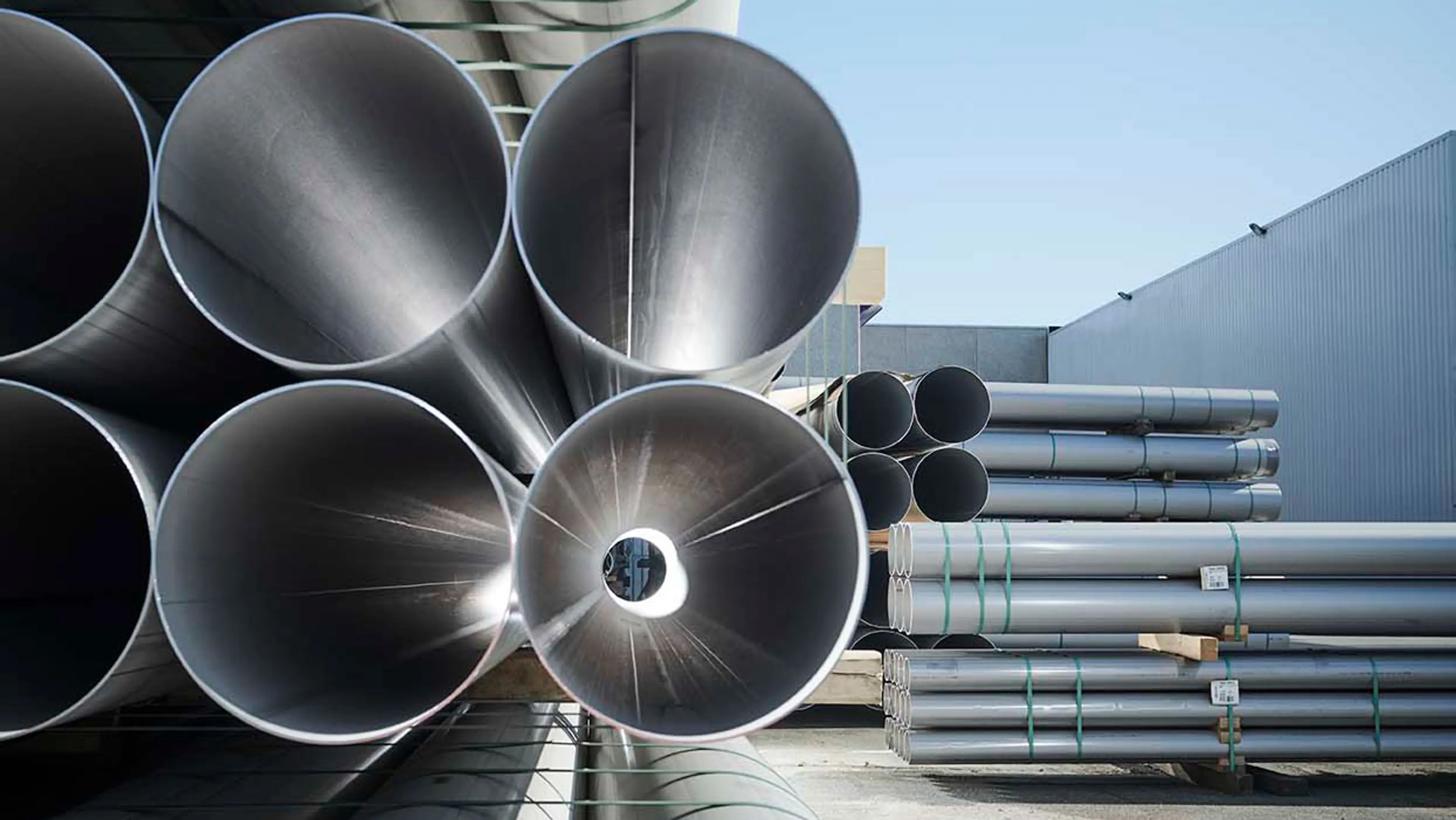
Tubes (Seamless)
Upcoming CBAM and safeguard measures are expected to hit the seamless tube market even harder than bar steel. Current plans indicate that allowable import quotas will be cut by more than 60%, with no clear country-specific quotas defined yet. This creates major uncertainty for importers, while new suppliers - some less reputable - continue to enter the market and compete for share.
As with bar steel, early risk mitigation is essential. European sourcing, which has long been considered unattractive, may become a viable strategy to ensure supply security. The combination of CBAM costs and stricter quotas will significantly reduce the competitiveness of imported material and reshape the market in 2026.
Tubes (Welded)
Throughout most of 2025, welded tubes faced significant price pressure due to declining flat product prices. Only in recent weeks has the market shown signs of recovery, supported by rising coil prices and European mills returning from the summer break.
Imports have never been a major strategic factor for most European buyers. However, CBAM and upcoming safeguard measures will indirectly impact pricing by altering the cost structure of flat products. Prices have already increased by 5 – 10% from the lowest point in around summer and will continue this trend throughout 2026.
Fittings and Flanges
The activity on fittings & flanges looks good, specially based on what is bought from warehouse, the market differs a lot on bigger projects, and also industrial sectors, where some industries are still inactive, and others are booming. So based on an overall calm but steady and good activity, it is not a problem to get new supplies. The only disturbances at the moment have to do with transport from asia, either prolonged delivery times, or waiting times at the major harbors. The European supply chain have been a bit under pressure, in Welded EN fittings, but mainly based on 1 bigger supplier, not being able to deliver to promise, but it only causes minor problems.
The prices out of Asia have actually been on a downwards trend, but the upcoming CBAM have compensated for that, leaving us at almost no changes end of day. For the European suppliers the picture is the other way around, here we have actually seen the prices moving a bit up - which also makes sense based on sheets, tubes and bar prices going up.
Bars
The amended Safeguard measures, which will take effect no later than July 1, 2026, mean, among other things, a significant reduction in quotas for stainless steel bars from Asian countries and a doubling of the “out of quota” tariff from 25% to 50%. This has led importers (wholesalers and end users) to increasingly turn their attention to European producers, who by the end of 2025 are experiencing higher order intake and longer delivery times.
In addition, many details regarding CBAM are still unresolved, including official benchmarks, which creates uncertainty about the actual costs and further contributes to buyers hesitating to purchase from Asia.
After a long period of relatively stable European base prices for stainless steel bars, including throughout 2025, expectations are that the mills will attempt to raise base prices no later than early Q2 2026, driven by reduced Asian imports and consequently longer lead times. Already now prices have increased a few percent and will continue to do so. For imports-material we expect an increase of 15 – 20% alone, whilst EU-producers will also have to increase their prices.
Ultimately, this could risk causing an actual shortage of certain bar steel products during 2026—partly because the ramp-up period for European bar steel mills will be relatively long, expected to be 6–8 months, after several years of reduced capacity due to the competitive situation.
Sheets & plates
After the usual seasonal increase in demand in Q1 2025, which led to moderate price rises, demand moved partly sideways and partly declined in Q2 and Q3, resulting in moderately falling prices during that period. Major stainless steel markets such as Germany and Italy experienced a more pronounced drop in demand compared to Scandinavia, where demand remained relatively stable.
As we approach 2026 and the implementation of the EU CBAM, Q4 shows signs of changing purchasing behavior among both wholesalers and end users. Many have shifted strategic focus, securing long-term contracts with European mills while preparing for the effects of CBAM and the increased documentation requirements.
At the time of writing, prices for flat products have risen by €60–80/ton in Q4 compared to the end of Q3 and further increases of €20–30/ton are expected in January 2026. We expect further increases as the mills are all running with losses, which naturally is unsustainable.
European mills report significantly higher order intake compared to earlier in 2025, leading to longer delivery times and expectations of additional moderate price increases in Q1 2026.
Price-development and conclusion
We are facing significant changes in our industry in the coming years, both on the safety in the supply chain and increasing prices.
Much has already been written and said about the introduction of CBAM and the new Safeguards, which to some extent will impact buyer behavior. Minimizing risk by shifting part of previous purchases from Asia to Europe will be a natural focus area - but at the same time, we must be prepared and aware that Asian suppliers will not give up market share without a fight and will likely work on alternative ways to handle the new trade restrictions. Time will tell what effect this will have on market dynamics in the long term.
In the short term, we are looking at rising prices as European mills’ order books fill up faster than in recent years, and the trend of increasing prices from Q4 2025 will continue into Q1 2026.
Whether these price increases will be “sustainable” will to some extent depend on whether demand starts to pick up during 2026, especially in the major stainless steel markets such as Germany and Italy.
Want to know more?
Palle Thomassen
Purchasing Director, Nordic
path@damstahl.com

THREE-TIME WINNER OF E-COMMERCE AWARD 2023
